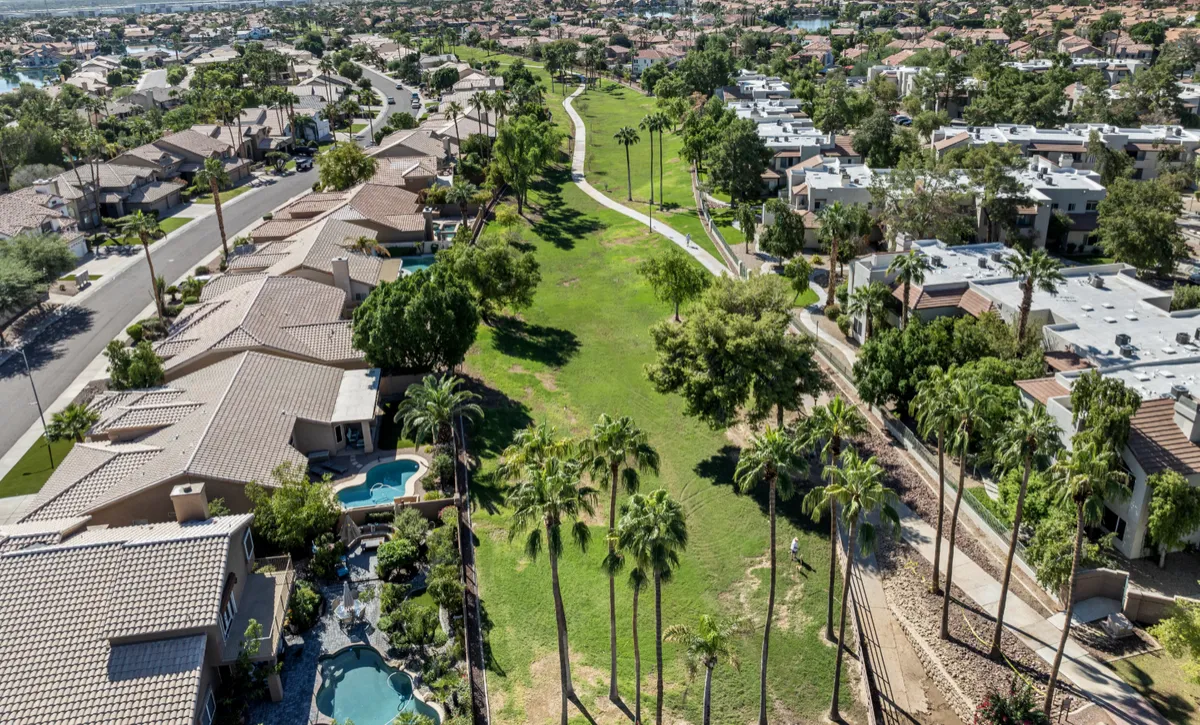
Moving to Ahwatukee, AZ? Here's What Nobody Tells You

An insider's honest take — from someone who has lived here for nearly 20 years.
I moved to Arizona from Illinois over 25 years ago to escape the winters. I fell in love with Phoenix first — the weather, the mountains, the wide open spaces, and yes, the fact that you don't have to shovel sunshine. But I was still looking for the right place to put down roots.
And then I found Ahwatukee.
Nearly 20 years later, here we are. I raised my kids here. I built my business here. I hiked these trails, served on boards, cheered at soccer and lacrosse games, and watched this community grow into something genuinely special.
So when relocation buyers ask me what they really need to know before moving here, I don't give them a brochure answer. I give them the lived-in version. The insider version. The version that takes years to actually understand.
I covered all ten things in detail in my video below — I'd encourage you to watch it because some of these stories are better heard than read. But here's the written version for those of you who want to bookmark it and come back.
First, Let's Talk About the Name
Ah-wah-too-kee. You're going to say it a lot. You're going to text it a lot. And Siri is absolutely going to betray you. Mine once spelled it "Ah turkey." I eventually programmed a contact into my phone named Ahwatukee just to train my voice-to-text. Which is probably why locals just call it "The Tuk."
The name itself has a fascinating history rooted in the 1930s when a property owner named Helen Brinton, inspired by Native American language, renamed her estate using a Crow phrase that roughly translates to "land on the other side of the hill." Geographically, that description is perfect. We are literally on the other side of South Mountain from the rest of Phoenix.
Which brings me to the identity question every new resident eventually asks.
Ahwatukee feels like its own town. But it's technically part of the City of Phoenix — one of 15 official urban villages, with three zip codes: 85044, 85045, and 85048. We're part of the Southeast Valley geographically, alongside Chandler, Gilbert, Mesa, and Queen Creek. But we're not quite any of those things either. We're our own pocket. Tucked against the mountain. And locals joke that we're the red-headed stepchild of the Southeast Valley — not because there's anything wrong with us, but because we've always felt like we operate on our own terms.
The Mountain Is Not Just the View — It's the Lifestyle
South Mountain Park and Preserve is over 16,000 acres with more than 100 miles of trails. You don't just look at it here. You use it. You hike before work. You trail run on weekends. You mountain bike. You explore.
One of my favorite Ahwatukee traditions is hiking over the mountain to Los Dos Molinos for margaritas — just over two hours of hiking, a strong margarita on the other side, a stop at The Silver Pony for live music and that classic locals vibe, and an Uber home. That is a very Ahwatukee kind of Saturday and we try to do it at least once a year.
But if elevation gain isn't your thing, the Pecos Shared Use Path runs about six miles from 40th Street to 17th Avenue — wide, separated from traffic, open 24 hours, and flat enough for runners, cyclists, and anyone who just wants to move without climbing a mountain. You can even connect into a 20-plus mile loop from the 40th Street Park-and-Ride.
We Used to Be the Largest Cul-de-Sac in America
Before the Loop 202, there was basically one way in and one way out of Ahwatukee. The mountain to the north. The reservation to the south. No through traffic. People didn't come back here unless they had a reason to, and a lot of residents loved exactly that.
The 202 changed everything in terms of connectivity — and it was controversial when it happened. But what most people didn't anticipate is that it didn't change the village feel. It just made us accessible.
Today, downtown Phoenix is about 20 minutes away. Sky Harbor Airport is 15 to 20. Tempe is right there. Chandler and Gilbert are close. You feel far from the hustle. But you're really not. And for commuters, the I-10 East RAPID bus from the 40th Street Park-and-Ride offers weekday service straight into downtown — over 900 parking spaces, hundreds of them covered. Not an all-day transit system, but a real commuter option worth knowing about.
Golf Is Part of the DNA Here
Golf carts cut through neighborhoods here. Fairway views come with back patios. Early tee times are a way of life before the Arizona sun reminds everyone who's in charge.
If you've been researching Ahwatukee you've probably come across conversations about Club West and its evolving future. Communities change. Amenities shift. That's what happens when a neighborhood has real history. But what gets lost in those search results is that golf here is still very much alive. Foothills Golf Club is thriving with a gorgeous desert-style layout recently renovated right in the heart of the community. The Lakes has been brought back to life as an approachable executive-style course. Ahwatukee Country Club continues under newer ownership with its own upgrades underway. And just minutes away, Whirlwind at Wild Horse Pass draws players from across the Valley with two championship-level courses. Golf as a lifestyle here is still real, still present, and still part of the character of this place.
It Still Feels Like a Small Town
Even with freeway access and proximity to everything, Ahwatukee quiets down after 10 p.m. There is no heavy nightlife scene here and most residents prefer it that way. When we go out it's usually east to Chandler or Gilbert for dinner, Tempe for a game, or downtown for an event. But then you come back over the mountain and it's peaceful again. You live in a sleepy little village that just happens to be part of the fifth-largest city in the country.
Winter Here Is the Whole Point
Relocation buyers don't fully grasp this until they experience it. When the Midwest and the Northeast are scraping windshields in January, we're outside. January through March is when Arizona comes alive — festival season, concert season, patio weather season. Barrett-Jackson. The Phoenix Open. Spring Training. Boots in the Park in Gilbert. The Innings Festival at Tempe Beach Park. The Ostrich Festival. Hot air balloons at Wild Horse Pass at sunrise. First Fridays downtown.
And for the pickleball community — Arizona in winter is basically pickleball heaven. The Mesa Carvana PPA Tour stops right here, where you can watch the pros compete and even sign up to play alongside them. Over 200 pickleball tournaments run annually at all skill levels. It is one of the most active pickleball markets in the country and Ahwatukee sits right in the middle of it.
That combination of community energy in the winter months and peaceful village calm the rest of the time is exactly why people who move here tend to stay.
It's Ranked the Number One Neighborhood in Phoenix
Niche.com has ranked Ahwatukee Foothills the number one neighborhood to live in Phoenix. That ranking pulls from public data, census statistics, housing trends, commute patterns, and resident reviews — people who actually live here. The themes that keep showing up in those reviews are community feel, South Mountain access, convenience without congestion, mature established neighborhoods, high owner-occupancy rates, and long-term residents.
No ranking system is perfect and you shouldn't move somewhere because of a badge on a website. But when third-party data lines up with what I've personally experienced living here for nearly 20 years, that's worth paying attention to. It's measurable livability, not just hype.
And Then There Are the Towers
At the top of South Mountain sit the communication towers. At night the red lights blink. You can't see them from everywhere — but when you're hiking, biking, or driving home from somewhere across the Valley, they become a landmark. South Mountain is usually to your south when you're heading home. And sometimes, from other parts of the Southeast Valley, it's those towers you see before Ahwatukee even comes into view.
Instead of a yellow brick road and ruby slippers — it's the blinking red lights.
You look up. You see them. And you know you're almost home.
The mountain becomes your compass. And over time, there's just no place like it.
The Bottom Line
Ahwatukee isn't flashy. It's not trying to compete with Scottsdale. It's not trying to be downtown Phoenix. It's its own pocket, tucked against the mountain — village-like, connected but calm. And for most of the relocation clients I work with, that balance is exactly what they've been looking for without quite knowing how to describe it.
If you're thinking about making a move to Ahwatukee or anywhere in the Southeast Valley, I've put together a detailed relocation guide that walks through lifestyle, neighborhoods, commute patterns, seasonal events, and what to expect throughout the year. It will help you picture what living here actually feels like — not just what it looks like on a map.
Request your free relocation guide here https://relocate.savvyrealtyaz.com/homevalue
And if you want to know what your Southeast Valley home is worth right now, you can get a free home value analysis at homevalue.savvyrealtyaz.com/home
You can reach me directly at 602-448-8081 or visit savvyrealtyaz.com. I've lived in this community for nearly 20 years and I'm not going anywhere.
And remember — Important Decisions Require Savvy Solutions.
Amy Richardson is the owner of Savvy Realty Group, licensed under HomeSmart in Arizona. She has been serving buyers and sellers in Ahwatukee and the Southeast Valley for nearly a decade and has called this community home for almost 20 years. She is the co-author of Savvy Solutions for Sellers: What to Expect When Selling Your Southeast Valley Home (2026).